European steel and aluminium value chains are pressing EU negotiators for the broadest possible expansion of CBAM. Their concern is that manufacturers can face carbon costs on metal inputs while competing finished imports remain outside the mechanism.
EUROMETAL reported the joint call on 20 October and reiterated it in coverage on 21 October, as negotiations between Parliament, the Council and the Commission get under way. The appeal includes metal producers, downstream industry associations and industriAll European Trade Union.
The same metal can reach Europe under different carbon-cost rules
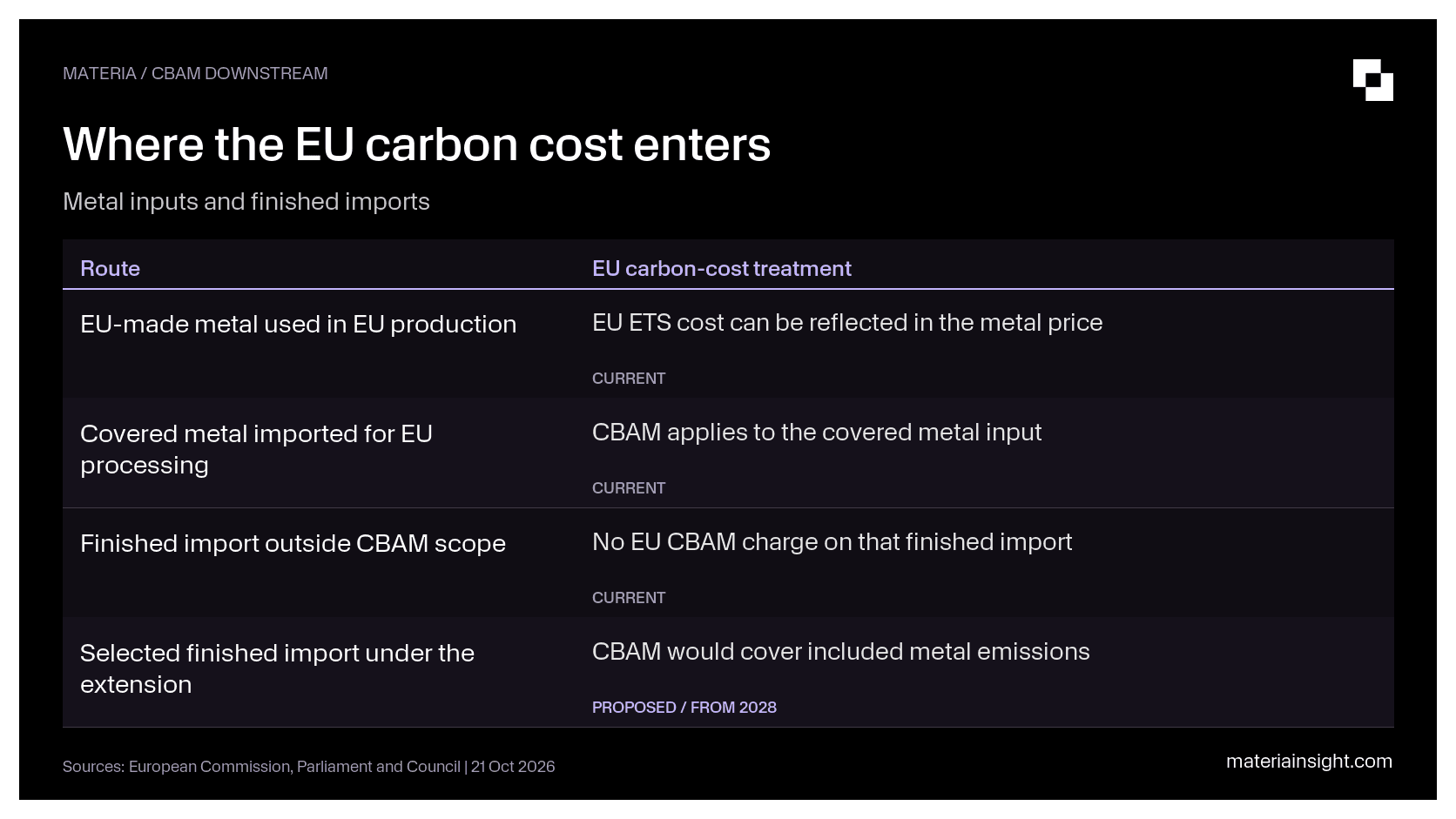
Steel made in EU installations can carry costs under the EU ETS, which can be reflected in the price charged to a fabricator. Covered steel imported for processing in Europe also falls under CBAM, subject to the applicable adjustments and exemptions.
A finished import whose customs classification falls outside CBAM does not attract a EU CBAM charge on the metal inside it. This can change the cost comparison between importing steel for European processing and buying the finished component abroad, even where the two routes use similar material.
The signatories argue that this difference creates a risk of manufacturing moving outside Europe or losing sales to finished imports. They expect that pressure to increase as EU ETS free allocation for CBAM sectors is progressively withdrawn through 2034. Otherwise the effect extends beyond steelmaking, influencing where the metal is turned into a saleable part or product.
Broader coverage would reach industrial supply chains
The Commission’s original proposal concentrates on steel- and aluminium-intensive goods, predominantly industrial equipment and supply-chain products. Household appliances are a visible example, but the proposed extension also concerns parts used in manufacturing. A wider scope would therefore affect purchases between industrial businesses as well as imports of consumer goods.
Adding a finished product would bring the emissions associated with its covered materials into the import-cost comparison. For otherwise comparable goods, lower-emissions metal could reduce the certificate bill relative to more emissions-intensive sourcing. Our CBAM in everyday products analysis illustrates this difference through washing-machine, cabinet and alloy-wheel scenarios using the same reference products with different material-emissions assumptions.
Parliament backed a broader downstream list than the Commission proposed. The Council also supports an extension and wants annual reviews of further products. Their positions differ on how the system would respond to severe market disruption: the Council retains a more tightly defined temporary exemption mechanism, while Parliament rejected removing goods from scope in response to price shocks. These alternatives would give manufacturers different levels of certainty about whether a covered import would continue to face a carbon charge during a price shock.
Downstream manufacturers have different exposures
Wider coverage can also increase costs for European factories buying imported components. A manufacturer may benefit from CBAM applying to its finished competitors while paying more for parts used in its own production. Its exposure depends on which inputs and competing finished products enter the final list.
That concern appears in the European Automobile Manufacturers’ Association (ACEA) and its partners’ joint statement of 5 October. They called for proportionate expansion and feasible implementation deadlines, citing the complexity of downstream supply chains and the administrative burden. Their position differs from the latest call for the broadest possible scope: the same extension can affect a European component producer and a European component buyer differently.
The extension concerns goods entering the EU. A European manufacturer selling into a third-country market would still face competitors operating under that destination’s carbon-pricing conditions. Parliament’s separate proposal for a temporary decarbonisation fund addresses that export-side exposure: for this reason, extending the import perimeter would not, by itself, remove it.
