CBAM operational hedging: certificate timing, EUA proxies and contract controls
An importer's CBAM exposure depends on certificate quantity and price, while the purchase schedule determines when cash leaves the business. European Union Allowance (EUA) futures and options can hedge part of the price exposure. Certificate quantity and the delay before customer recovery remain with the importer.
For goods imported in 2026, the European Commission assigns a quarterly certificate price from the weighted average of EU ETS auction clearing prices. Q1 is €75.36/tCO2 and Q2 is €75.28/tCO2. Certificates become available for purchase from February 2027, but the purchase date does not change the price attached to those imports.
From 2027, certificate prices are calculated weekly, so purchase timing changes the price paid. At each quarter-end, an authorised CBAM declarant must hold certificates corresponding to at least 50% of year-to-date embedded emissions. The balance uses the official default basis or, where permitted, the previous year's surrendered position, after the free-allocation adjustment. The 50% balance is the legal minimum, while the volume hedged should reflect expected certificate demand.
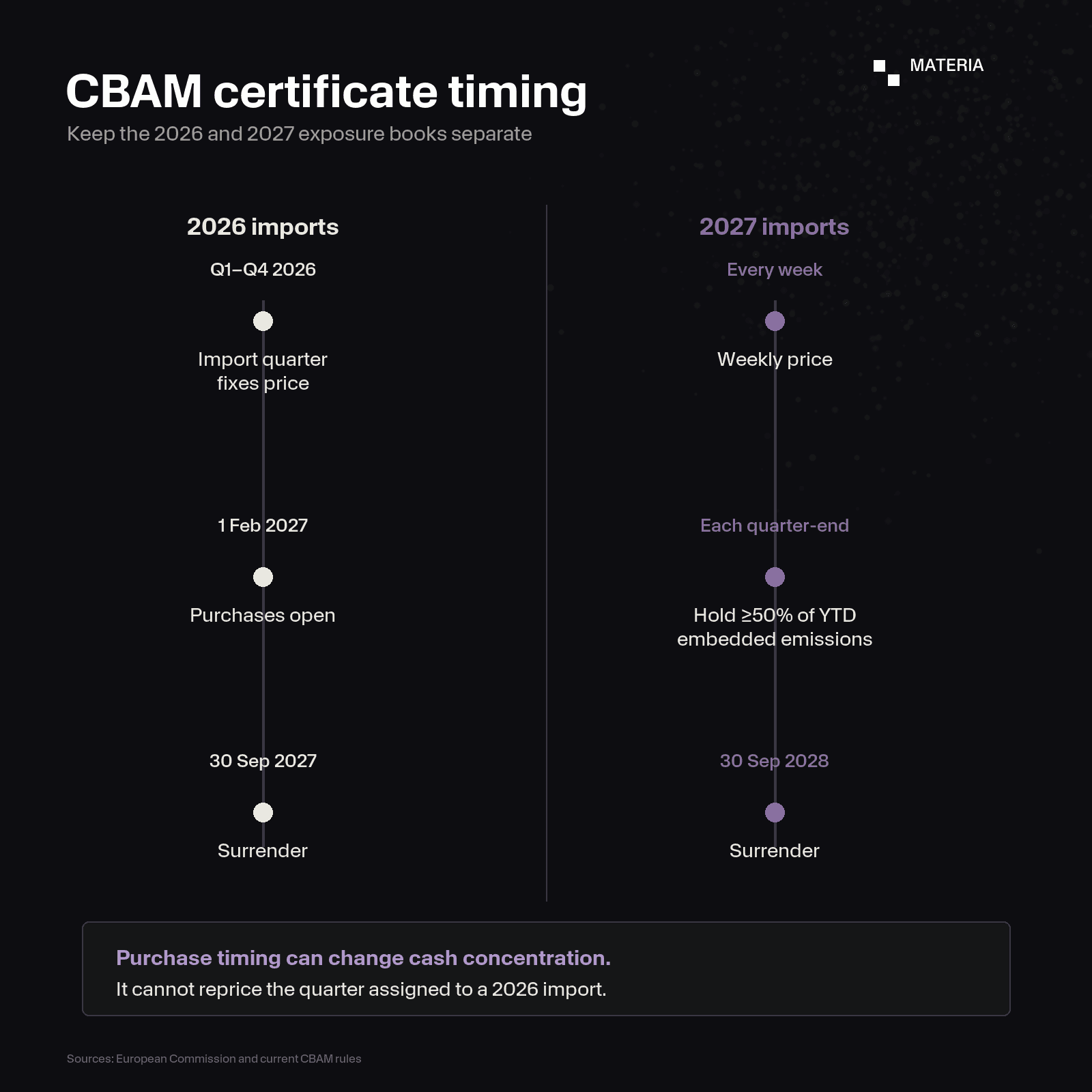
For 2026 imports, the import quarter fixes the price, so treasury manages changes in certificate quantity and the delay between certificate payment and customer recovery. From 2027, treasury also decides when to buy against a price that changes each week.
Hedge the price component with the right instrument
Before certificate sales begin, importers can use an EUA future or forward to lock a proxy price against expected certificate demand. A call option provides a price cap in return for a premium. Once weekly certificate sales begin for 2027 imports, staged purchases can spread price fixing and cash outflow, although lower import volumes or verified emissions can leave excess certificates.
ICE Endex EUA futures are physically delivered, and one lot represents 1,000 EUAs. An importer expecting 1,400 certificates cannot match that volume exactly with standard lots: one lot leaves exposure open, while two can create an over-hedged position. An EUA received at expiry cannot be surrendered for CBAM, and the company must manage the position together with its margin or collateral requirement.
Size coverage from expected certificates
Base the hedge on imported volume and the best available emissions data, then recalculate it when a shipment or verified emissions value changes expected certificate demand. An eligible foreign carbon-price deduction can also reduce the obligation, leaving the importer over-hedged even if the EUA price has not moved.
The official CBAM price follows EU ETS auction averages, while futures and options trade at their own price and expiry. Treasury should compare the hedge result with the official certificate price and choose an expiry that matches the planned certificate purchase. A company funding the obligation outside the euro also carries a separate currency exposure.
Combine market hedges with contract and cash controls
Supplier contracts should allocate the cost created when emissions data is missing or cannot be verified. Customer contracts should tie any provisional CBAM charge to the official certificate price and permit a true-up once verified emissions and eligible deductions are known.
Financing a €500,000 certificate outflow for 180 days at 6% costs about €14,795. A price hedge can reduce volatility while margin still deteriorates if the importer pays for certificates months before recovering the cost from its customer.
Before hedging, treasury should compare expected certificate demand with existing price coverage and budget the financing gap when customer reimbursement follows the certificate purchase.
